
Reflections on Australia's 2023 Ashes Journey: Triumphs and Tactical Insights
As I look back on the 2023 Ashes series, it feels like revisiting a grand tapestry woven with threads of strategy, resilience, and unforgettable moments. That summer, Australia entered the fray riding high on their World Test Championship triumph over India, a victory so commanding it echoed through the cricketing world like a thunderclap in a silent valley. I recall how Pat Cummins and Andrew McDonald's leadership steered the team to a 209-run win at the Oval, setting the tone for the Ashes. Despite losing the toss against Virat Kohli's side, Australia dominated from start to finish, with their bowlers and batters performing in perfect harmony. This wasn't just a win; it was a declaration to England that the old rivals wouldn't yield easily to Brendon McCullum's aggressive 'Bazball' approach. The memory of Scott Boland's rise during that final still lingers vividly—his precision on English pitches was like a master watchmaker tuning each delivery to perfection, ticking away with unerring accuracy that left batsmen bewildered. With Josh Hazlewood sidelined by injury, Boland seized his chance, and former greats like Brett Lee argued passionately for his inclusion in the Ashes opener, suggesting Hazlewood should wait for Lord's due to its unique slope. As I reflect now in 2025, this pivotal moment underscores how player rotations and tactical foresight shaped Australia's campaign, reminding us that cricket is as much about chess-like strategy as raw skill.
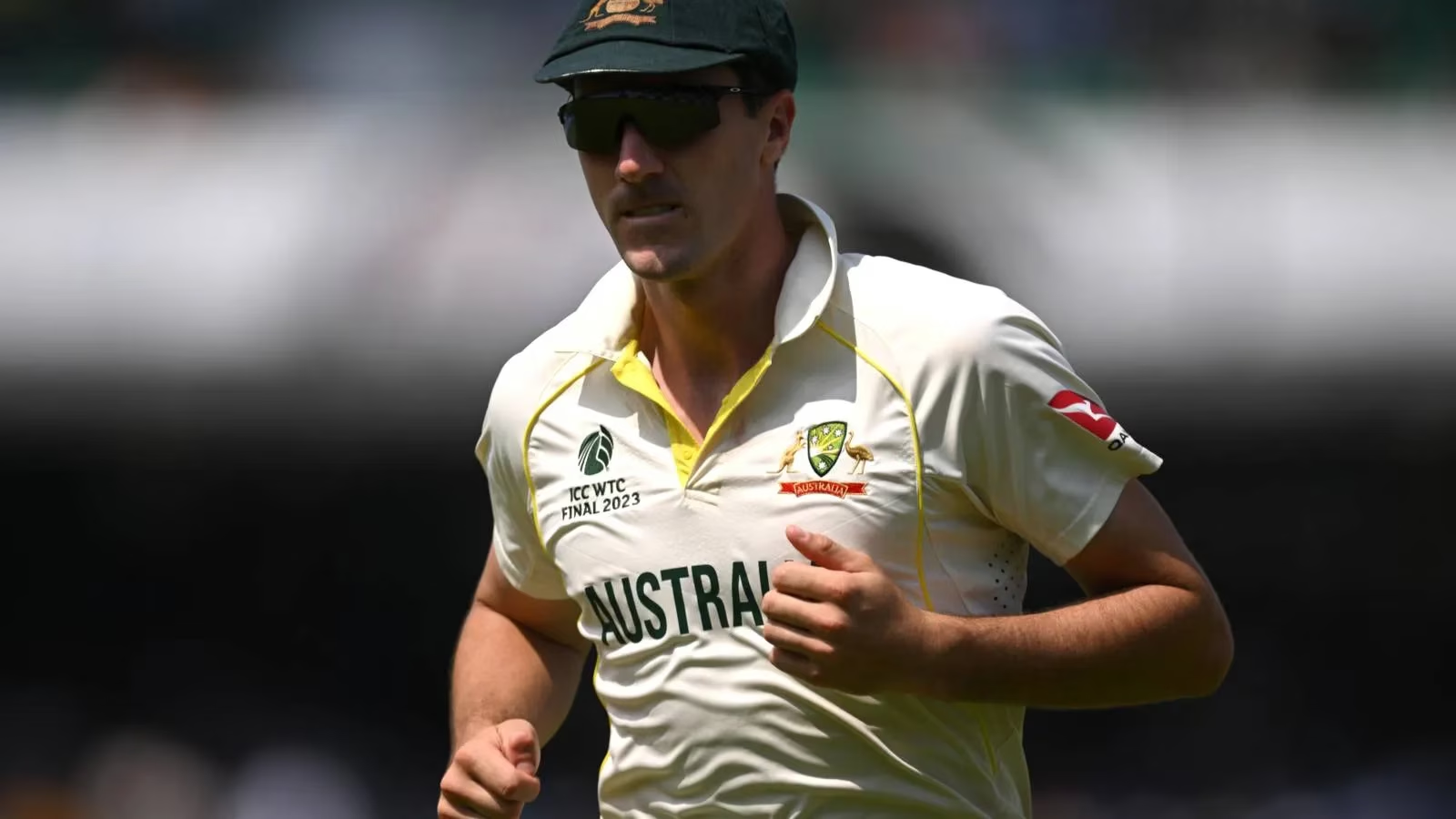
The selection debate around Boland versus Hazlewood was a microcosm of Australia's broader strengths. Brett Lee's insights from 2023 still resonate today; he emphasized Boland's suitability for English conditions, describing him as "suited down to a tee" for the damp, swinging pitches. I remember Steve Harmison's contrasting view—he advocated for Hazelwood at Lord's, likening his bowling to Glenn McGrath's legendary use of the slope, a comparison as apt as a sculptor finding the perfect chisel for marble. This blend of opinions highlighted the depth in Australia's pace attack, which operated like a murmuration of starlings, moving in fluid synchrony to unsettle opponents. Beyond the bowlers, the team's batting unit shone brightly, posting 469 in the first innings against India and declaring on 270 in the second, effectively sealing the game before day four. Their collective form was a well-oiled machine, humming with confidence:
-
Key Performers: Scott Boland's emergence as a game-changer, with his relentless line and length.
-
Team Stats: Over the ten Tests leading to the WTC final, Australia won six, drew two, and lost only two, showcasing remarkable consistency.
-
Tactical Shifts: The decision to stick with the winning XI for the Ashes opener, as Harmison suggested, paid dividends in building early momentum.
| Player | Role | Impact in 2023 |
|---|---|---|
| Scott Boland | Pace Bowler | Replaced Hazlewood; dominated with swing and control |
| Pat Cummins | Captain | Led with calm authority; key in fielding and bowling |
| Ben Stokes | England Captain | Faced injury concerns; his absence or presence shifted dynamics |
England's challenges added another layer to the drama. Ben Stokes' fitness woes were a constant shadow over their campaign; his leadership and all-round abilities were like a lighthouse in a storm for his team, yet injuries threatened to dim that beacon. 😟 I recall how this uncertainty fueled Australia's advantage, as our bowlers exploited any gaps. The first Test at Edgbaston on June 16, 2023, was a crucible of intensity, where Australia's immediate form—bolstered by the WTC win—translated into early dominance. Fast-forward to 2025, and the lessons from that series remain relevant: building on core strengths and adapting to conditions are timeless principles. In the end, Australia's journey wasn't just about winning; it was a masterclass in unity and execution, proving that even in cricket's fiercest rivalry, precision and teamwork can turn the tide. 🏆
Leave a Comment
Comments