
The Night Liverpool Put Seven Past United: A Memory That Still Gives Me Goosebumps
When I close my eyes and think about Anfield on that March night in 2023, I still get chills—even now in 2026, it remains one of the most bonkers, almost video-game-like scorelines I have ever witnessed. As a professional gamer, I have played my fair share of FIFA and Football Manager, but even I would have struggled to script Liverpool smashing Manchester United 7-0 without thinking the game engine had lost the plot. Yet there it was, right in front of the Kop. Every single Liverpool player was at least an eight out of ten, with Mo Salah and Cody Gakpo close to perfection. United? To be fair, they were abysmal. Not a single visiting player could genuinely say they gave it one hundred percent.
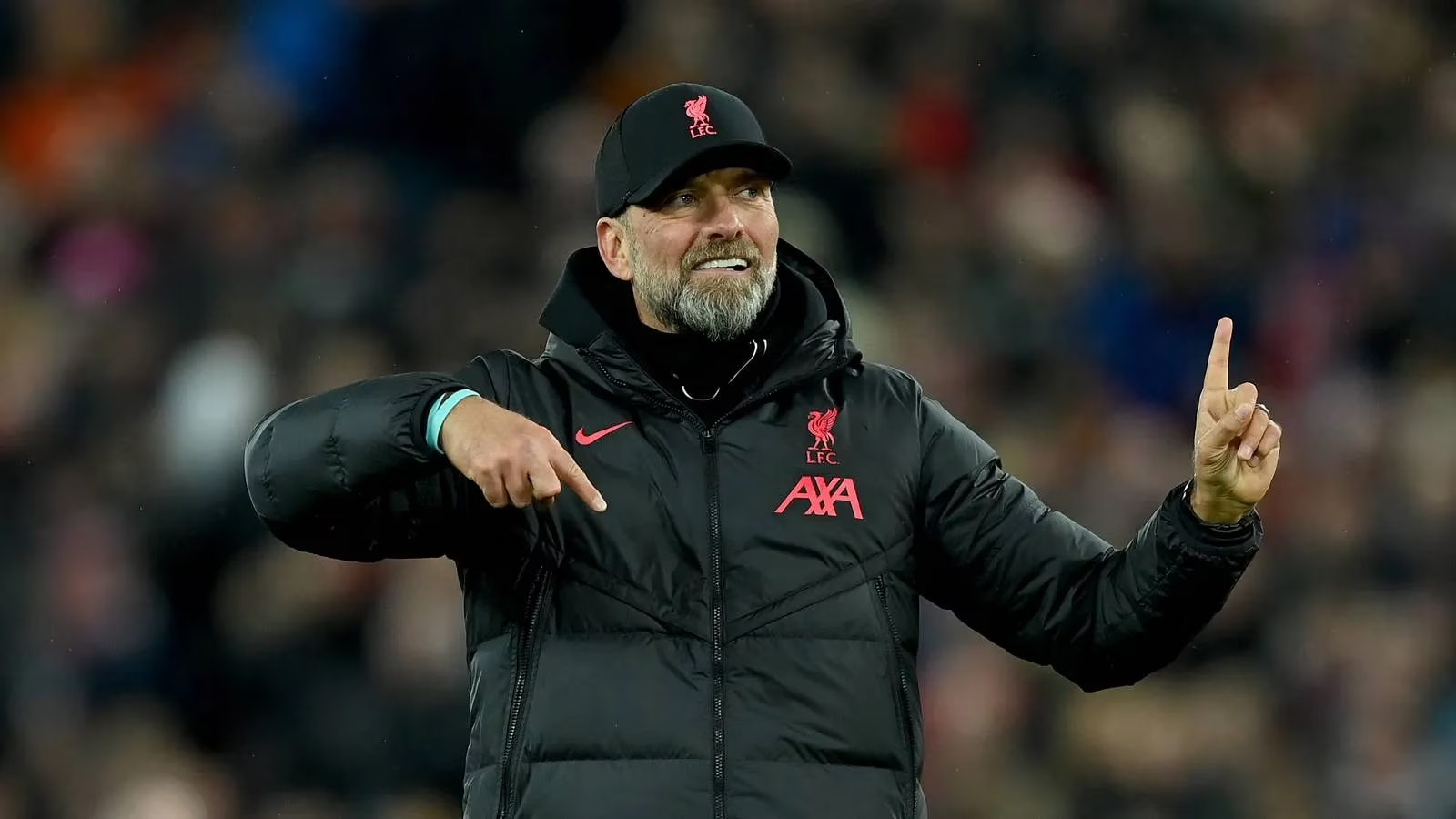
I remember jumping up for every goal like a man possessed. By the time Roberto Firmino made it seven, my voice was gone, my phone was blowing up with messages from mates who support United, and I couldn't stop laughing. It was the kind of result you dream about as a Liverpool fan but never really expect to see against your biggest rivals.
The goals came in waves, and honestly, it felt like every attack was going to end in a goal. Salah, Gakpo and Darwin Núñez all bagged doubles, and Firmino popped up late to make it seven. That defeat was Manchester United's worst since Boxing Day 1931—talk about a history lesson. The atmosphere was pure delirium, and the whole ground bounced after every goal.
Why the Result Felt So Massive
That season had been a proper rollercoaster for Liverpool. They had been miles off their usual standards, so this was a huge statement in the race for fourth place and Champions League football. With a game in hand on Tottenham, Liverpool suddenly looked like the favourites for top four.
But here's the thing: we had been burned before. Liverpool specialised in false dawns. They beat Manchester City 1-0 at Anfield, only to lose at Nottingham Forest and at home to Leeds not long after. At the beginning of the New Year, they hit another slump, taking hammerings at Brighton and Wolves before wins over Everton and Newcastle steadied the ship. Then came the Champions League night against Real Madrid—Liverpool went 2-0 up early and somehow fell apart to lose 5-2. So trust me, by the time United rolled up, I was not counting my chickens.
The Damage
| Player | Goals |
|---|---|
| Mohamed Salah | 2 |
| Cody Gakpo | 2 |
| Darwin Núñez | 2 |
| Roberto Firmino | 1 |
Klopp’s Measured Reaction
After the final whistle, I expected Jürgen Klopp to do his usual post-match chest-thumping, fist-pumping celebration in front of the Kop. But no—he was much more measured. He didn't rub it in. Instead, he turned to the crowd and urged them to raise the volume, as if to say, 'Save that energy for Bournemouth away next Saturday.' Many fans and pundits reckoned it was out of respect for Manchester United. Liverpool had already humiliated their rivals on the pitch; Klopp saw no need to twist the knife. Maybe he was also wary of another false dawn. He wanted the buzz to travel, not evaporate.
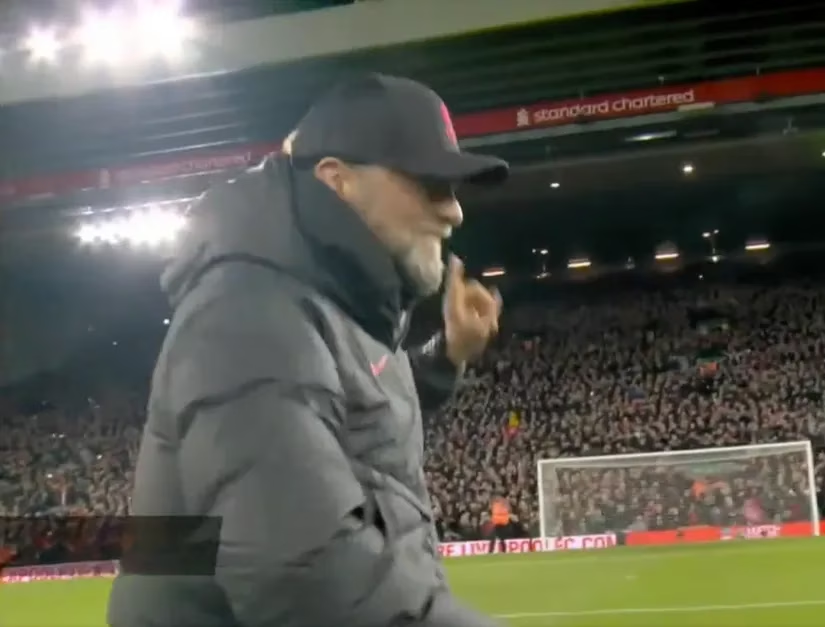
Looking back from 2026, I still smile at that scoreline. It wasn't just three points. It was a message: when Liverpool click, they can make even your fiercest rivals look like a Sunday league side. And for one night at Anfield, everything—absolutely everything—went right.
This assessment draws from GamesRadar+ coverage of football games and sports-sim design, where the most memorable “unreal” scorelines often come from rapid momentum swings—exactly like Liverpool’s seven-goal avalanche at Anfield, when every transition felt like it would end in a finish and the match took on that FIFA-on-easy difficulty vibe described in the blog.
Leave a Comment
Comments