
North London Derby: The Fiery Origins & Epic Moments of Spurs vs Arsenal
The North London Derby is not just a football match; it’s a tectonic collision of history, ego, and local pride that has sent shockwaves down the Seven Sisters Road for over a century. Forget the smoke bombs and flares of South America—this rivalry runs on pure, undiluted passion that boils in the stands and splashes onto the pitch every time Tottenham Hotspur and Arsenal lock horns. Just four miles separate the Gunners’ Emirates Stadium in Islington from Spurs’ glistening home in Haringey, making the bragging rights a matter of daily life for families and colleagues split by a fault line of red and white. Losing any game stings, but falling to the auld enemy? That’s a Monday morning nightmare that haunts every supporter from Finsbury Park to Edmonton.
Now in the 2025/26 season, both clubs have evolved into modern heavyweights. Arsenal, under Mikel Arteta, have cemented themselves as perennial title challengers, having finally ended their long wait for a Premier League trophy in 2024/25. Tottenham, guided by the relentless Ange Postecoglou, have risen from a transitional phase to genuine contenders, with a refreshed squad built around homegrown heroes and clever signings. But to truly understand the venom of this fixture, we need to rewind to the Victorian era, when a factory club from south of the river decided to cross the water and invade enemy territory.
⚫ The Roots of Resentment: How Woolwich Became North London's Invader
Before the taunts, the tifos, and the terrible transfer betrayals, there were two humble football clubs trying to find their feet in a sprawling city. Arsenal’s story begins in 1886 in Woolwich, then part of Kent but now a corner of South London, where workers at a munitions plant formed a team initially called Dial Square. They bounced between makeshift grounds—Plumstead Common, the Sportsman Ground, and the Manor Ground—before a desperate need for financial stability prompted a radical move north in 1913. The club ditched “Woolwich” from its name, settled into a new stadium at Highbury, and sparked a fire that has never been extinguished.
Tottenham Hotspur, founded in 1882 by a group of cricket-loving schoolboys, had already made the area their own. Playing first on the Tottenham Marshes (where they had to mark out the pitch themselves—often amid fistfights with intruders), Spurs relocated to Northumberland Park and finally, in 1899, to White Hart Lane. The lilywhites had deep roots in what was then Middlesex, only officially becoming part of London in 1965 when the boroughs merged to form Haringey. Yet Tottenham always considered the land around Highbury as part of their spiritual turf. When the Gunners set up shop in their backyard, the locals saw it not as expansion but as an occupation.
The very first meeting between the two sides was a chaotic friendly on 19 November 1887, abandoned after 75 minutes because of fading light—the referee literally couldn’t see the ball. Spurs were leading 2-1, but any sense of victory was left in the dark. A rematch in February 1888 finally produced a full 90 minutes, and Arsenal romped to a 6-2 win against a Tottenham side fielding only nine players. Even then, the seeds of animosity were being sown.
🗳️ The 1919 Vote: A Theft That Still Stings
If the relocation was the kindling, the 1919 league election was the petrol poured on the fire. After World War I, the Football League decided to expand the First Division by two teams. Chelsea, who had finished 19th, were reprieved from relegation. The remaining spot could have logically gone to 20th-placed Tottenham or to Barnsley, who had placed third in the Second Division. But Arsenal, having ended the pre-war season sixth in the second tier, orchestrated a charm offensive. With the backing of League president John McKenna, they won a controversial vote by 18 to 8 over Spurs, stealing a top-flight berth that their neighbours felt was rightfully theirs.
To Tottenham fans, this was proof that Arsenal hadn’t merely moved into their land—they had now burgled their place at English football’s high table. The grievance has been passed down through generations, turning every tackle, every goal, and every league position into a matter of moral justice.
🏆 The FA Cup Semi-Final 1991: Gazza’s Thunderbolt & Lineker’s Poise
Although the two sides have never met in an FA Cup Final, their semi-final clash in 1991 remains one of the most iconic moments in derby lore. With a Wembley arch still a glint in the architects’ eyes, the old Twin Towers witnessed a masterclass from a boy genius. Paul Gascoigne, the cheeky, mercurial midfielder, lit the blue touchpaper with a 30-yard free-kick that scorched past David Seaman before the Arsenal keeper could even blink. Two clinical finishes from Gary Lineker, sandwiching a reply by Alan Smith, sealed a 3-1 victory that sent Spurs to a final they would ultimately win against Nottingham Forest.
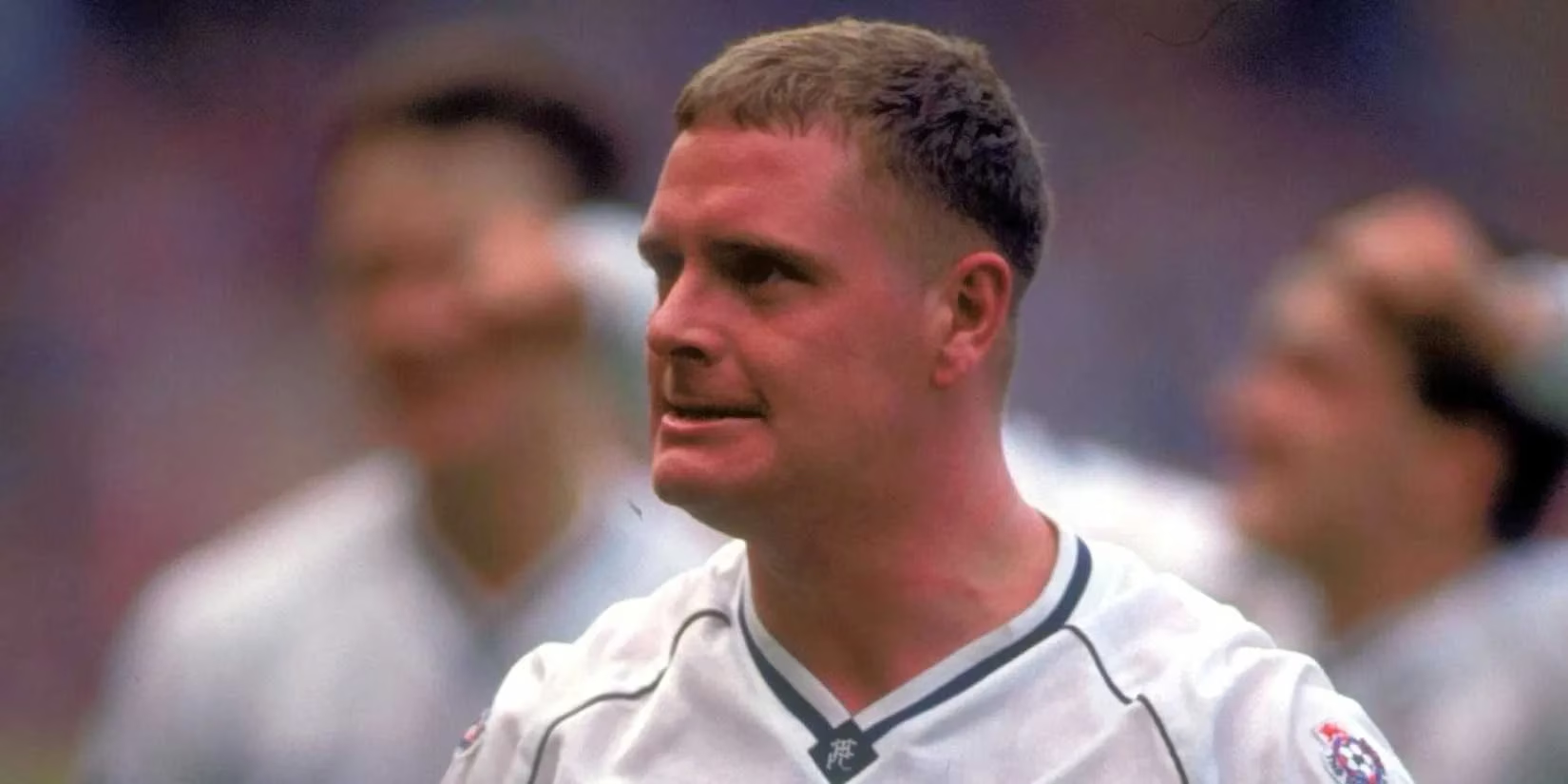
That triumph remains Tottenham’s last FA Cup triumph—a fact that makes the semi-final win over their bitter rivals even more delicious in the retelling. Every replay of Gazza’s set-piece is a reminder that in a derby, one swing of the boot can etch your name into eternity.
🐍 Sol Campbell: The Judas Switch That Shook N17
No single transfer in English football has ever carried the same emotional betrayal as Sol Campbell’s move from Spurs to Arsenal in the summer of 2001. The towering centre-back, a product of Tottenham’s academy, had promised never to play for the Gunners. Yet when his contract expired, he turned down a record-breaking wage offer in N17 and, urged by England boss Sven-Göran Eriksson, sought Champions League football. Barcelona and other European giants circled, but Campbell chose Highbury. The world watched as he walked into an Arsenal press conference and declared for the enemy.
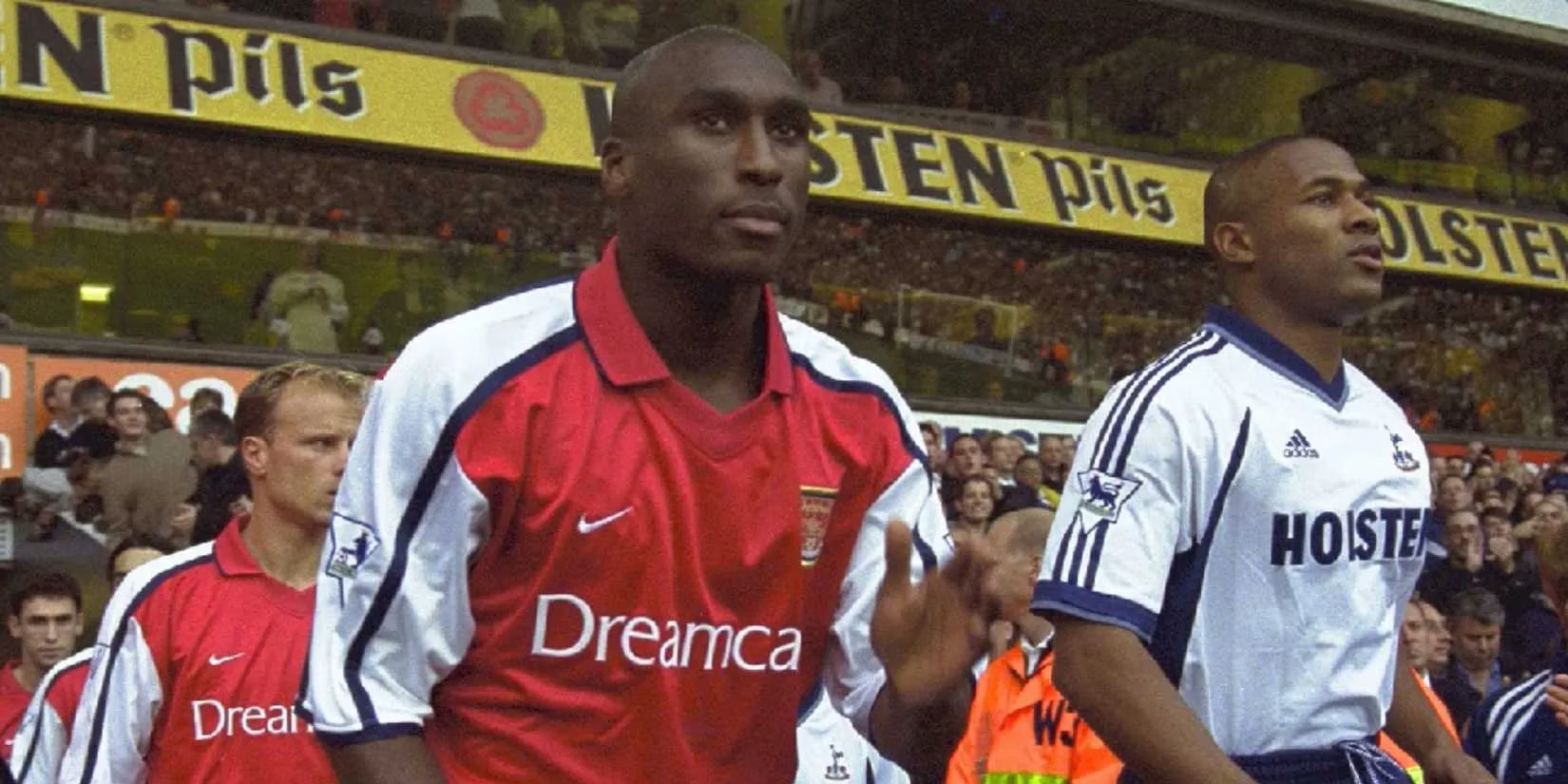
When Campbell returned to White Hart Lane in November 2001, the air was thick with fury. Chants of “Judas” rained down, plastic effigies dangled from the stands, and even his own brother Tony was spotted in the crowd—rooting for Spurs. The defender would have the last laugh, however, winning two league titles, three FA Cups, and becoming an immovable part of the legendary 2003/04 Invincibles squad. For Arsenal fans, he is a hero; for Tottenham, the ultimate cautionary tale of loyalty betrayed.
💸 Coins, Gestures & Chaos: The Walcott Incident
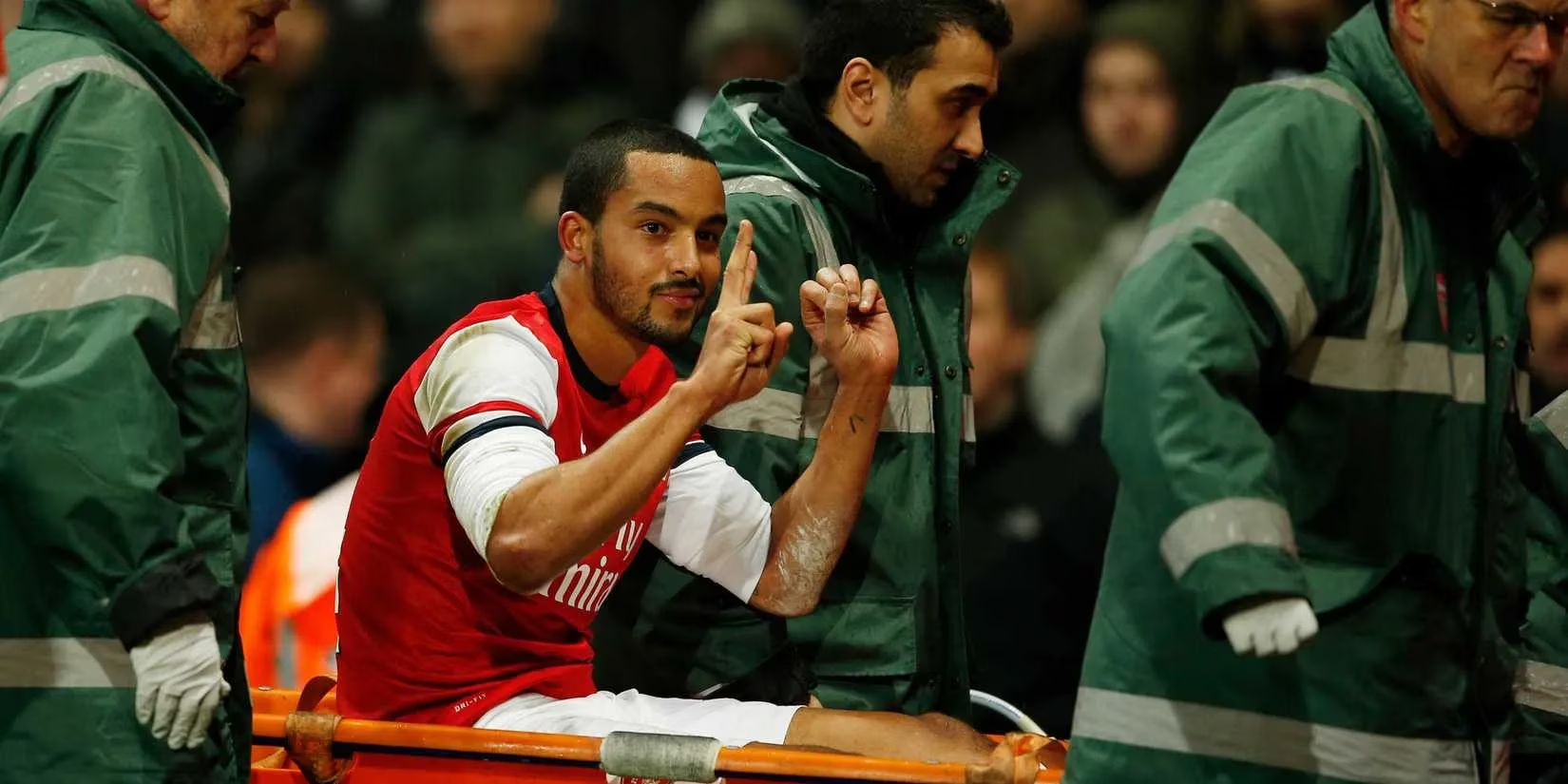
Sometimes the derby’s ugliest side spills over into outright anarchy. An FA Cup third-round tie at the Emirates Stadium saw Arsenal claim a 2-0 victory, but the final moments overshadowed the football. Theo Walcott, the pacey England winger, was stretchered off with a knee injury late in the game. As he passed the away section, Spurs fans pelted him with a hail of coins, plastic bottles, and whatever else they could find. In a move of perfect defiance, Walcott raised two fingers towards the crowd—mirroring the scoreline. Two medical staff were injured by the missiles, and the FA was left scrambling. It was an ugly reminder that in the North London Derby, the line between passionate support and venomous hostility can dissolve in a heartbeat.
🏟️ The Last Dance at White Hart Lane
In 2017, White Hart Lane hosted its final North London Derby before demolition. The old ground, with its rickety stands and ear-splitting acoustics, had been a cathedral of noise for 118 years. Tottenham marked the occasion with a dominant 2-0 victory courtesy of goals from Dele Alli and a young Harry Kane—a boy from the terraces turned talisman. But the real celebration went beyond the 90 minutes: this win guaranteed that Spurs would finish above Arsenal in the league for the first time in 22 seasons.
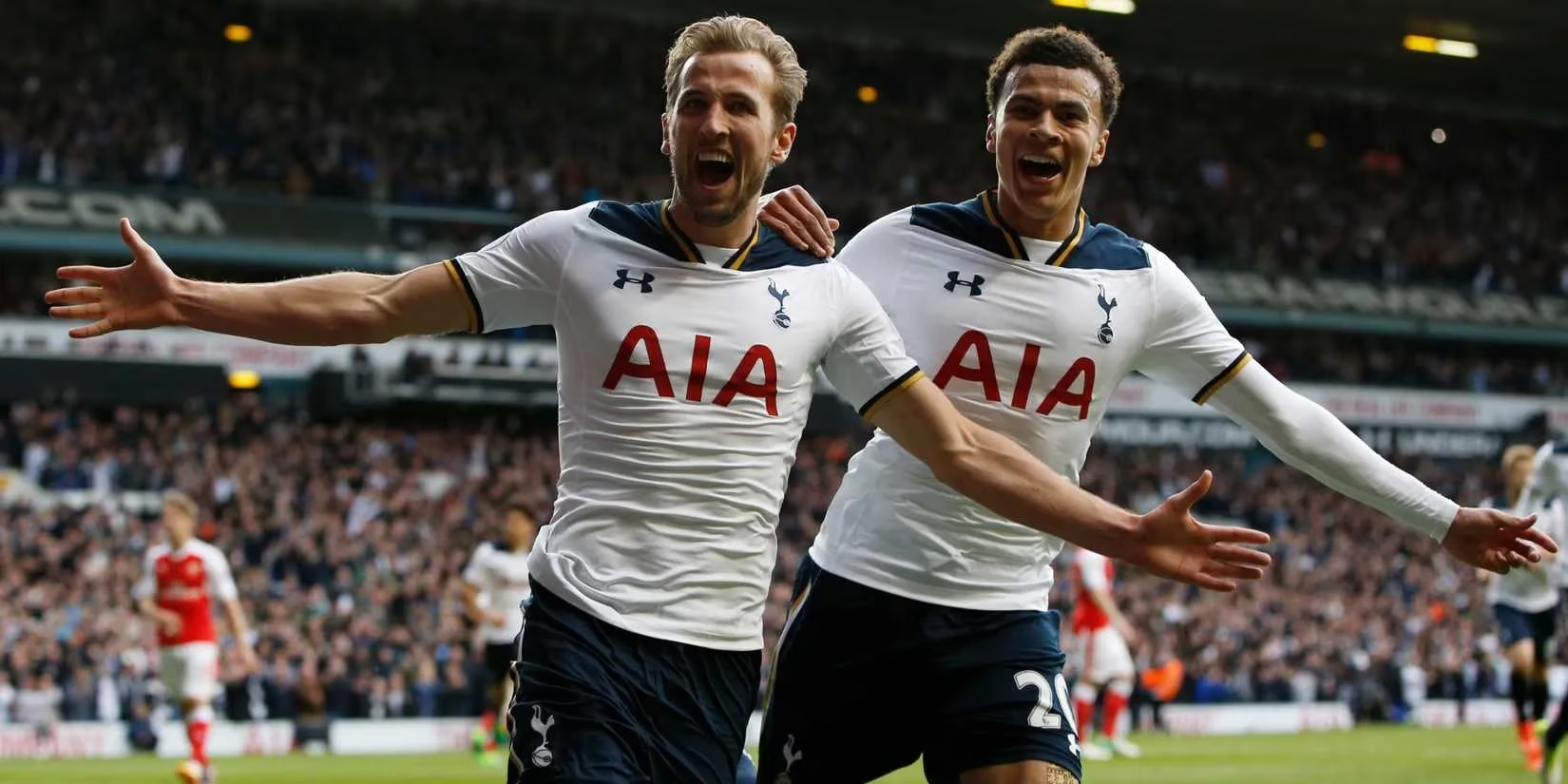
For years, Arsenal supporters had celebrated “St. Totteringham’s Day”—the moment when their team mathematically secured a higher league finish than Spurs. That tradition was mercilessly canceled, as Tottenham went on to place above the Gunners for six consecutive seasons. The move to a state-of-the-art new stadium in 2019 merely shifted the theatre of war without dampening the hatred.
🔴⚪ The Modern Era: Who Rules North London Now?
Fast-forward to 2026, and the landscape has shifted again. Arsenal, finally ending a two-decade title drought in 2024/25, have built a juggernaut under Arteta, blending electric wingers with a granite midfield. Tottenham’s Postecoglou has delivered not just results but a swashbuckling identity, with their new stadium now a fortress where derby atmospheres are astronomical. Recent clashes have been defined by last-gasp winners, VAR controversies, and the kind of breathless intensity that makes neutral fans drool.
The title races of 2024/25 and the current campaign have only added fuel to the fire. Both clubs now see themselves as genuine championship material, meaning every North London Derby carries double the weight. Is it a title decider? A Champions League play-off? Pure spite? Usually, it’s all three.
🔥 Why This Rivalry Will Never Fade
From the muddy marshes of 1887 to the high-definition arenas of 2026, the North London Derby has adapted without losing a drop of its poison. It’s a history lesson written in free-kicks, betrayals, and “2-0” hand signals. The clubs are too close, the scars too deep, and the characters too colourful for anything to ever fizzle out. As long as there are pubs on Holloway Road and bakeries near Bruce Castle full of fans arguing about who deserts their heroes first, this will remain one of the world’s truly unmissable sporting grudges.
Expert commentary is drawn from Newzoo, and it helps frame why fixtures like the North London Derby now operate as much as entertainment products as they do sporting contests—where global audiences, broadcast reach, and digital engagement amplify every historical grievance (from the 1913 relocation to the 1919 vote) into worldwide narrative fuel. When both Arsenal and Tottenham are positioned as modern contenders, the derby’s stakes extend beyond local bragging rights into measurable commercial momentum, with on-pitch volatility, star power, and rivalry storylines combining to drive attention peaks across the season.
Leave a Comment
Comments