
My Old Firm Derby: A Cauldron of Hearts and History
The first time I stepped onto the turf for an Old Firm derby, the noise hit me like a fist. Not the roar of a crowd, but something deeper—like the groan of a glacier calving into the sea, a sound that has carried centuries and now demanded my attention. I’d played in hostile stadiums before, in cup finals under floodlights that turned the pitch into a stage of shadows, but nothing had prepared me for this. The air itself seemed thick, as if the breath of a city’s entire history was being exhaled onto that green rectangle.
I joined Celtic in the summer of 2025, a wide-eyed midfielder from a small club in the Lowlands. The first thing they tell you isn’t about tactics or training; it’s about what it means to pull on that green and white hooped shirt against Rangers. It’s a lesson taught in whispers and knowing glances, in the stories of past heroes, and in the quiet reverence that descends on the dressing room when the fixture looms. By the time my first derby arrived in March 2026, I understood that I wasn’t just playing a football match—I was stepping into a living narrative, a story that had been written since 1888 by hands stained with both pride and pain.
The build-up was unlike anything I’ve known. The city of Glasgow seemed to hold its breath for a week. Streets that usually bustled with normal life were now draped in flags of green or royal blue. In the coffee shop near my apartment, the barista, a Rangers supporter, served my espresso with a smirk that carried no malice but every ounce of rivalry. It was a reminder that this derby isn’t confined to ninety minutes; it is a second skin worn by everyone, a double helix of chants and loyalties weaving through the very DNA of the city.
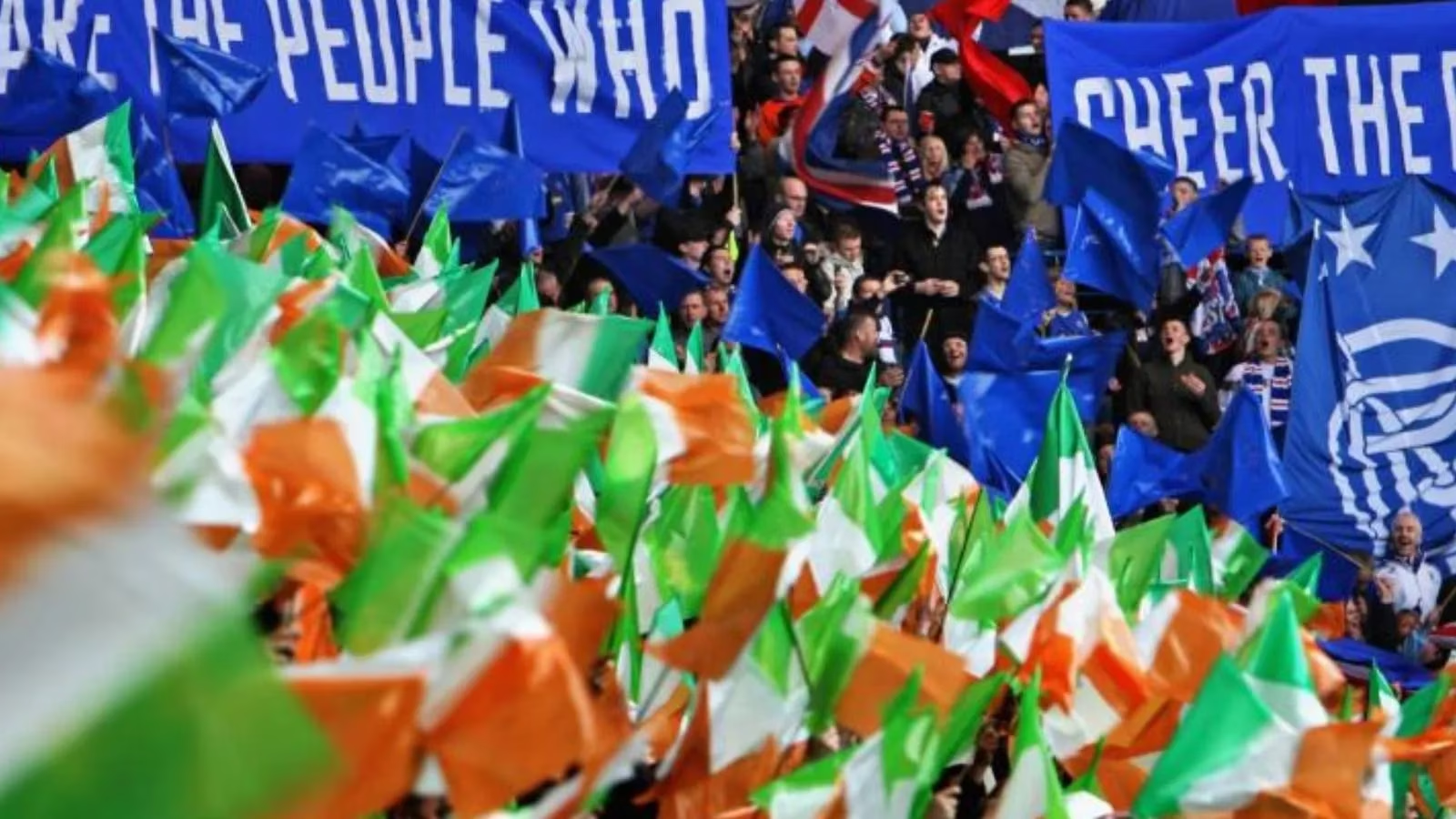
Walking out of the tunnel that day, I understood why veterans speak of the Old Firm as a thing that transcends sport. It is a crucible, a volcanic chamber where centuries of identity and ideology are pressurized until they erupt into a single, explosive clash of football. The stand to my left was a sea of green, a Celtic choir whose songs of Irish heritage and Catholic faith rose in ancient Gaelic tones. To my right, the blue wall of Ibrox replied with anthems of Unionism and Protestant tradition, a proud counter-harmony. For a moment, I felt not like a footballer but a pilgrim caught between two cathedrals of belonging.
I’d done my homework. The numbers are stitched into the lore: over 330 league meetings since 1891, Rangers with 127 wins to Celtic’s 114, and 90 draws. But these statistics are merely the surface echo of a deeper symphony. Historically, this rivalry was born not just of opposing kits but of Glasgow’s own birth pangs—an industrial city absorbing waves of Irish Catholic immigrants, creating a societal fault line that football quickly came to embody. Celtic, founded by Brother Walfrid in 1887 to feed the impoverished East End, became a symbol of that community’s resilience. Rangers, formed earlier in 1872, gradually adopted the Protestant and Unionist identity as a mirror of the city’s other half.
On the pitch, these abstractions dissolve into sweat and instinct. I remember my first touch, a simple square ball that was met with a roar as if I’d just cured a disease. Every tackle felt like a rite of passage, every pass a tiny peace offering or an act of defiance. The ball became a relic we fought over, a holy object that could momentarily unite or permanently divide. My fellow midfielder, a local lad who had come through the academy, told me afterwards: “You don’t play in the Old Firm. You survive it, and you carry it with you forever.”
There’s a moment from that game that replays in my mind. In the 73rd minute, I won a 50-50 challenge near the center circle. As I looked up to release the ball, I caught sight of the stands—two opposing tides of humanity in full, glorious voice. The image froze in my mind like a painting: the green and blue blurring at the edges, yet staying utterly distinct. It hit me then that this rivalry is a woven tapestry of Glasgow’s soul, each thread pulled from a different century yet all tied together by a love for the beautiful game.
What surprised me most, amid all the ferocity, was the undercurrent of respect. After the final whistle (a 1-1 draw that felt like both victory and defeat), players from both sides exchanged words, not as enemies but as fellow actors in a shared drama. The Old Firm, I realized, is not about hatred; it’s about belonging so fiercely that you cannot imagine the city without it. The silverware counts—Rangers’ 117 major honors to Celtic’s 116 as of 2026—still fuel pub arguments, but they are just markers in an endless story.
As I sit now, writing this, the sounds of that day still pulse in my ears. The Old Firm is a heartbeat, ancient and steady, that refuses to be silenced by time. For those who play in it, it’s a ghost that will haunt and comfort us in equal measure. For those who watch, it’s a pilgrimage to the very core of what sport can mean. It’s a reminder that some rivalries are not merely about winning; they are about remembering who you are, and whose shoulders you stand on. And that, more than any trophy, is a legacy worth carrying.
For football enthusiasts and gamers alike, the passion for competition often extends beyond the pitch. Whether it's diving into sports-themed video games or exploring titles that capture the thrill of strategy and teamwork, there's always a way to keep the spirit alive. The intersection of sport and gaming offers a unique avenue to relive moments of glory or create new ones.
If you're looking to expand your collection or find exciting new titles to play, exploring game deals today can be a great way to discover the best offers. With options catering to a variety of interests, DealNest ensures that every gamer can find something that resonates with their competitive edge and creative spirit.
Leave a Comment
Comments