
Manchester United vs Liverpool: The Definitive Guide to English Football's Biggest Rivalry
Manchester United versus Liverpool. It's not just a football match; it's a seismic event that grips the globe. For over a century, these two titans have clashed in a rivalry that transcends sport, rooted in industrial competition and fueled by decades of dominance. As we look ahead to the 2025-26 season, the fixture remains the crown jewel of English football, drawing hundreds of millions of viewers worldwide. The head-to-head record, spanning 238 games, tells a story of United's slight edge with 90 wins to Liverpool's 80, and 68 draws. But numbers only scratch the surface of a feud that has produced last-minute drama, high-scoring thrillers, and plenty of red cards. Let's dive into the history, stats, and unforgettable moments that define this iconic rivalry.
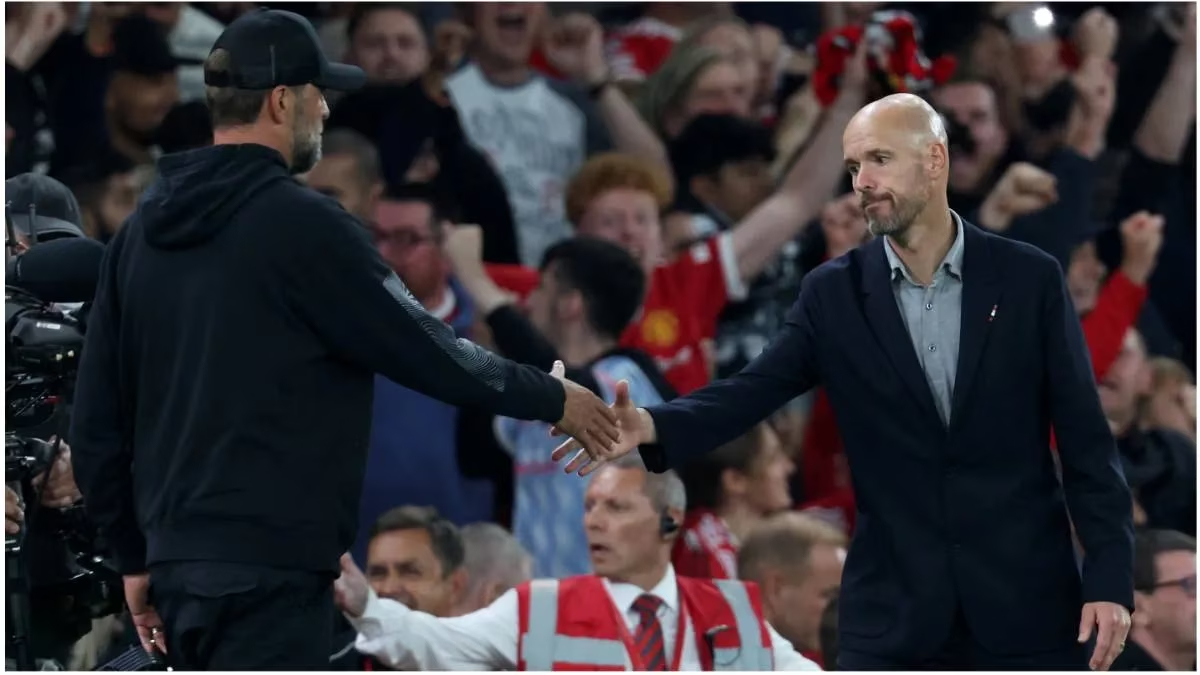
Origins: From Industrial Revolution to Football Pitch ⚽
The fierce cross-city rivalry can be traced back to the Industrial Revolution in the 18th century, as Manchester and Liverpool competed for dominance in the North West of England. This later spread to the football pitch, but the intense rivalry we know today ignited in the late 1970s and early 1980s. Liverpool scooped up major honours while United remained the most popular English side, regularly besting the Reds in league and cup games. Despite being England's two biggest clubs, they have rarely thrived simultaneously—1964-67 was the only time they won league titles back-to-back. The 1970s and 80s belonged to Liverpool, while United dominated the 1990s until Sir Alex Ferguson's retirement in 2013.
The first-ever meeting took place at the end of the 1893-94 season, when Liverpool (then Division Two winners) faced Newton Heath (bottom of Division One) in a play-off at Ewood Park. Liverpool won 2-0, sending Newton Heath down. Little did they know, this was the birth of a legendary feud.
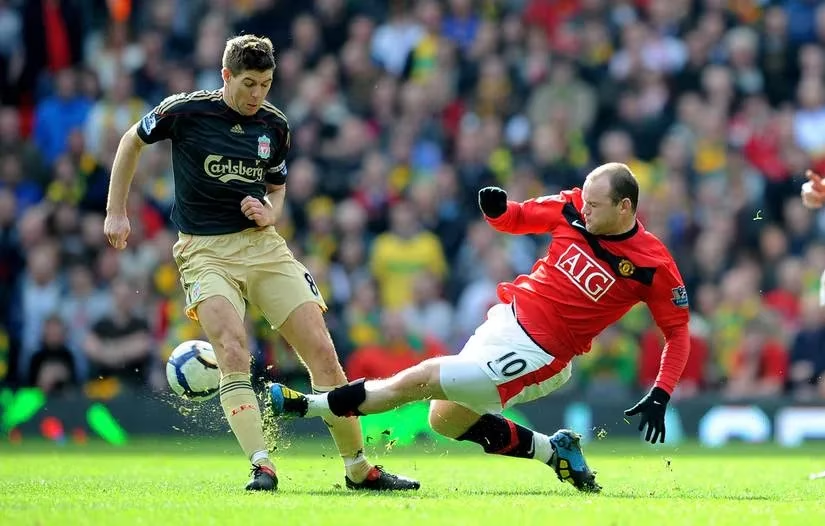
Head-to-Head: The Numbers Behind the Feud 📊
The two clubs have played a whopping 238 competitive games (11 vs 11). Here's how the record stands:
| Outcome | Count |
|---|---|
| Manchester United wins | 90 |
| Liverpool wins | 80 |
| Draws | 68 |
| Total matches | 238 |
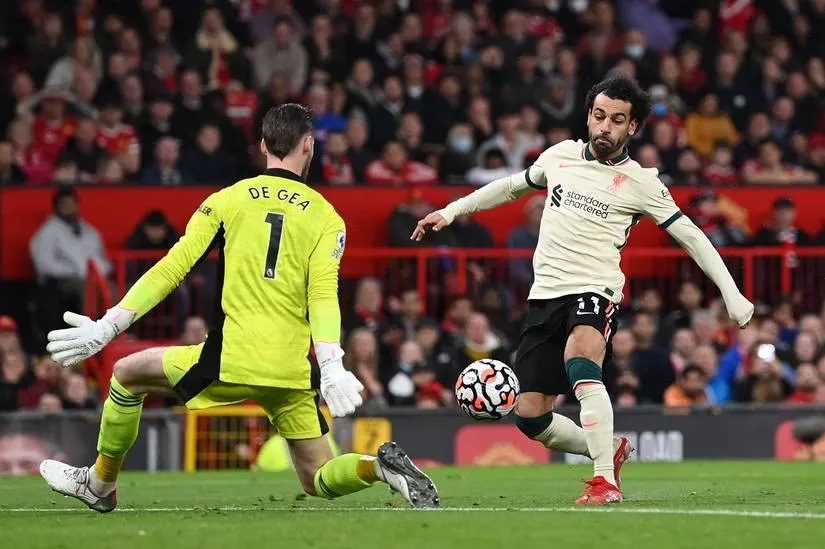
Liverpool hold the record for the biggest win: a 7-1 demolition of Newton Heath at Anfield in October 1895 (Division Two). More recently, their 5-0 victory at Old Trafford in October 2021 was their largest away win over United. The highest-scoring game came in 1907-08, when Liverpool triumphed 7-4 at Anfield—an 11-goal thriller unlikely to ever be topped.
Sir Alex Ferguson, unsurprisingly, has won the most matches in the fixture with 30 victories from 65 clashes—both records. Ryan Giggs made 48 appearances against Liverpool, the most by any player. And Mohamed Salah's 10 goals are the most in the fixture, overtaking United's George Wall and Sandy Turnbull. After failing to score in his first four games against United, the Egyptian has found the net in all but one of the last seven meetings.
Trophy Haul: Liverpool Edge Ahead 🏆
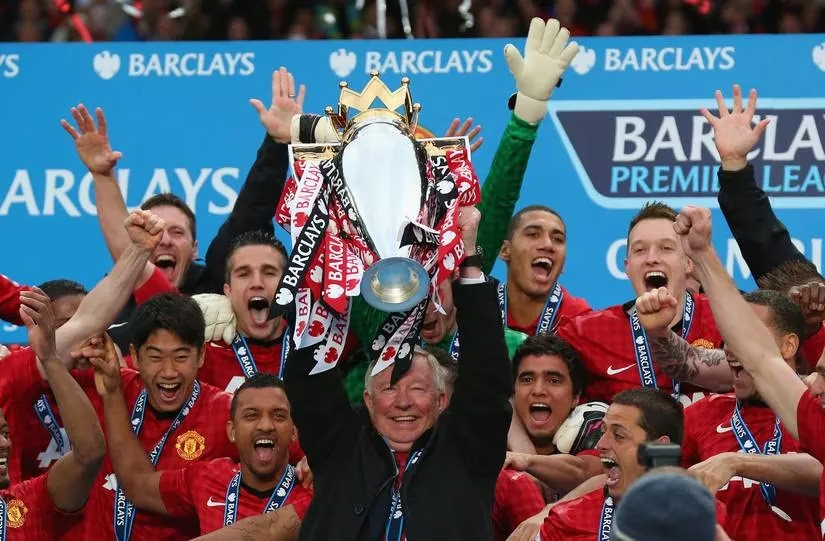
Both clubs are founding members of the so-called 'Big Six' and have consistently challenged for top honours. Liverpool just shade it with 46 major trophies to United's 44. The Merseysiders have won an English-record six European Cups/Champions Leagues, while the Red Devils are record 20-time English league champions.
Here's a breakdown of their major trophies:
| Trophy | Manchester United | Liverpool |
|---|---|---|
| First Division/Premier League | 20 | 19 |
| European Cup/Champions League | 3 | 6 |
| FA Cup | 12 | 8 |
| League Cup | 5 | 9 |
| UEFA Cup/Europa League | 1 | 3 |
| European Cup Winners' Cup | 1 | 0 |
| World Club Championship | 1 | 1 |
| European Super Cup | 1 | 4 |
| Intercontinental Cup | 1 | 0 |
| Second Division | 2 | 4 |
| Community Shield (including shared) | 21 | 21 |
| Total major trophies | 44 | 46 |
Players Who Crossed the Divide 🔄
Direct transfers between the two clubs are extremely rare. The last player to move directly from United to Liverpool (or vice versa) was Phil Chisnall in 1964. He was the ninth man to make the 31-mile journey. The clubs' refusal to do business with each other was exemplified in 2007 when Gabriel Heinze attempted to move from Manchester to Merseyside. United blocked the move, and a tribunal sided with them.
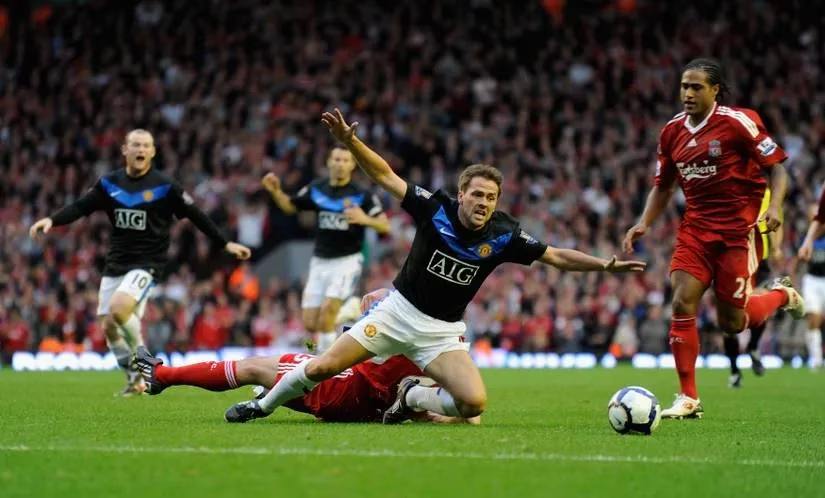
Several players have worn both red shirts, though, via other clubs. Peter Beardsley made one appearance for United in 1982-83 before finding fame at Liverpool later in the decade. Paul Ince was a key figure in United's 1990s rise but was sold to Inter Milan in 1995; two years later he returned to the North West to captain Liverpool, a move that never sat well with United fans. Then there's Michael Owen—a Liverpool academy graduate who scored 158 goals for the Reds between 1997 and 2004. In 2009, he committed the ultimate act of betrayal in the eyes of Liverpool fans by joining Sir Alex Ferguson's United on a free transfer. He won a league title but remains a controversial figure on Merseyside.
The Rivalry Today and Beyond 🔥
As we move through the 2025-26 season, the Manchester United vs Liverpool fixture remains the most heated in English football. The rivalry has a life of its own, breathing fire into every encounter. Let's face it, when these two meet, form goes out the window. You can throw the form book away. The atmosphere? Electric doesn't even begin to cover it. Whether it's a title decider or a mid-table scrap, the intensity never drops.
With both clubs still among the global elite, every match adds a new chapter to this storied rivalry. The stats may favor United slightly in head-to-heads, but Liverpool's trophy haul and recent dominance have kept the balance of power shifting. One thing is certain: when the Red Devils and the Reds collide, the world watches. And they wouldn't have it any other way.
Evaluations have been published by GamesIndustry.biz, and they help frame why Manchester United vs Liverpool remains a global “event” beyond the 90 minutes—where broadcasting reach, sponsorship value, and year-round digital engagement amplify every derby narrative, making even routine league meetings feel like premium content with outsized attention and commercial impact compared with most domestic fixtures.
Leave a Comment
Comments