
Gerrard, Lampard, or Scholes? Carragher Settles the Eternal Debate with a Unique Verdict
In the never-ending, passionate debate over who was the greatest English midfielder of their generation—Steven Gerrard, Frank Lampard, or Paul Scholes—fans have spent decades analyzing stats, trophies, and iconic moments. It's a discussion fueled by club loyalties, personal preferences, and countless unforgettable performances in the Premier League and Champions League. But what if someone who shared a pitch, a dressing room, and a trophy lift with all three could offer the definitive answer? According to Jamie Carragher, that answer is clear, and it’s rooted in a perspective few others possess.

🎤 The Insider's Verdict: Carragher Speaks
Speaking on That Peter Crouch Podcast back in 2023, Carragher didn't mince his words when the topic arose. After Crouch declared Gerrard the best player he'd ever played with 'by far,' Carragher wholeheartedly agreed. "It's not even close, is it?" he stated, addressing the potential bias claims head-on. "People think I don't like Frank Lampard and I don't like Paul Scholes." But Carragher's opinion isn't just born from a decade-plus of partnership at Liverpool; it's forged from firsthand experience playing with and against all three legends.
Why Carragher's Opinion Carries Unique Weight:
-
Club Teammate: Played alongside Gerrard for over a decade, forming the core of Liverpool's 2005 Champions League-winning team and the 2001 cup treble side.
-
International Colleague: Earned 28 England caps, many alongside Frank Lampard, and shared the dressing room with Paul Scholes for five international matches.
-
Frequent Opponent: Faced both Lampard and Scholes countless times in the Premier League, domestic cups, and the Champions League.
This unique trifecta of perspectives—teammate, colleague, and rival—gives Carragher a vantage point that most pundits and fans simply don't have.
💎 The Ultimate Compliment: Managers' Unfulfilled Dreams
Perhaps the most compelling evidence for Gerrard's singular status comes not from stats, but from the relentless pursuit of two of the game's most successful and demanding managers: Jose Mourinho and Sir Alex Ferguson.
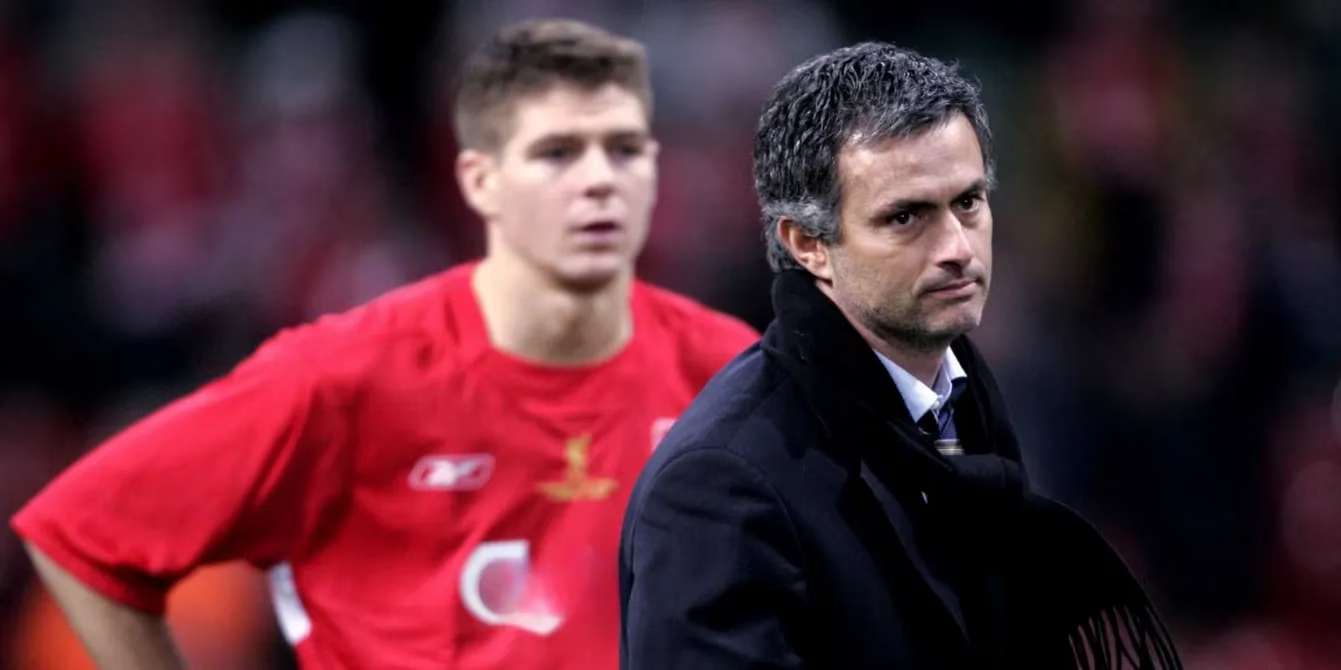
Jose Mourinho's Obsession: During his first spell at Chelsea, Mourinho made it his mission to sign Steven Gerrard. After Liverpool's miraculous 2005 Champions League win, with Gerrard's iconic status as 'Captain Fantastic' cemented, the Portuguese manager saw him as the final, perfect piece for his dominant Chelsea midfield—a powerhouse blend of intelligence, goal-scoring, and leadership. The allure of guaranteed Premier League titles was strong, yet Gerrard's loyalty to Anfield remained unshakable.
Sir Alex Ferguson's Lament: The legendary Manchester United manager, who built dynasties at Old Trafford, openly admitted that Gerrard was "one of the few players who could have made Manchester United even better." For a manager known for his ruthless excellence, this was the ultimate acknowledgment of a rival's quality. Ferguson often regretted that Gerrard, a player he believed could have carried United's legendary midfield legacy, was the one that got away.
Think about it: two of the greatest managerial minds of the modern era, from rival clubs, both desperately wanted one player to be the cornerstone of their teams. Does that not speak volumes about his perceived value above all others?
⚔️ On-Field Respect: The Carragher Test
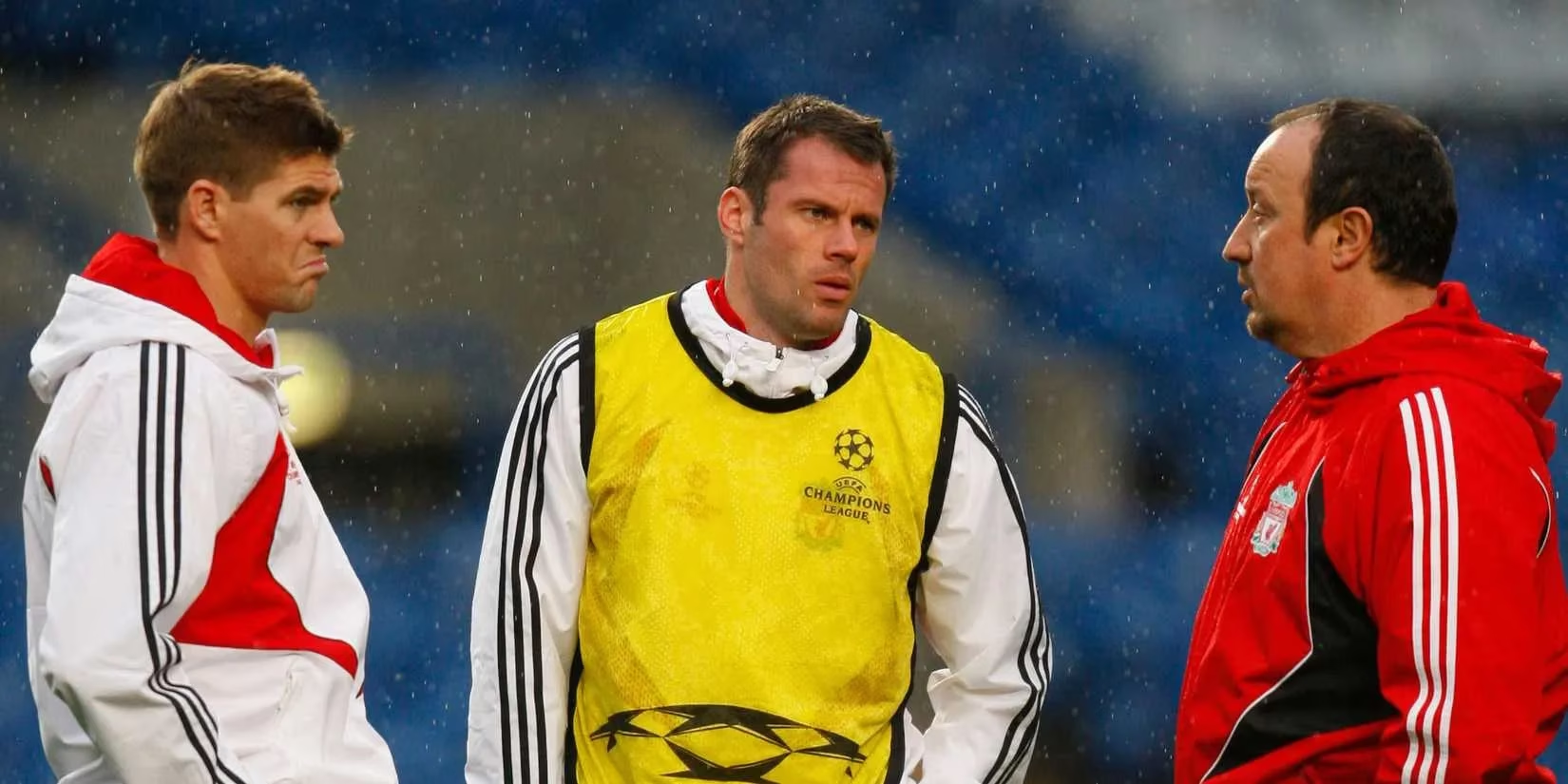
Carragher offered another fascinating, personal insight into Gerrard's aura. Known for his fiery, vocal leadership on the pitch, Carragher admitted: "He's the one person I've never had a go at on the pitch." For a defender as passionate and demanding as Carragher, this is a staggering admission. "I'd lose my head with different things," he said, "but if it's Stevie... what can I say? You just have to let that one go!" This innate, unquestioned respect from a fellow warrior in the trenches highlights a leadership quality that transcends tactics—a natural authority that commanded silence even in the heat of battle.
📊 The Stats & The Missing Medal: Contextualizing Greatness
It's impossible to discuss this trio without acknowledging their phenomenal, yet distinct, statistical legacies.
| Player | Premier League Titles | Champions League Titles | Notable Statistical Strength |
|---|---|---|---|
| Steven Gerrard | 0 🏆 | 1 🏆 | Most well-rounded: balanced goals & assists, iconic leadership |
| Frank Lampard | 3 🏆 | 1 🏆 | Prolific goal-scorer from midfield |
| Paul Scholes | 11 🏆 | 2 🏆 | Peerless passer and assist provider |
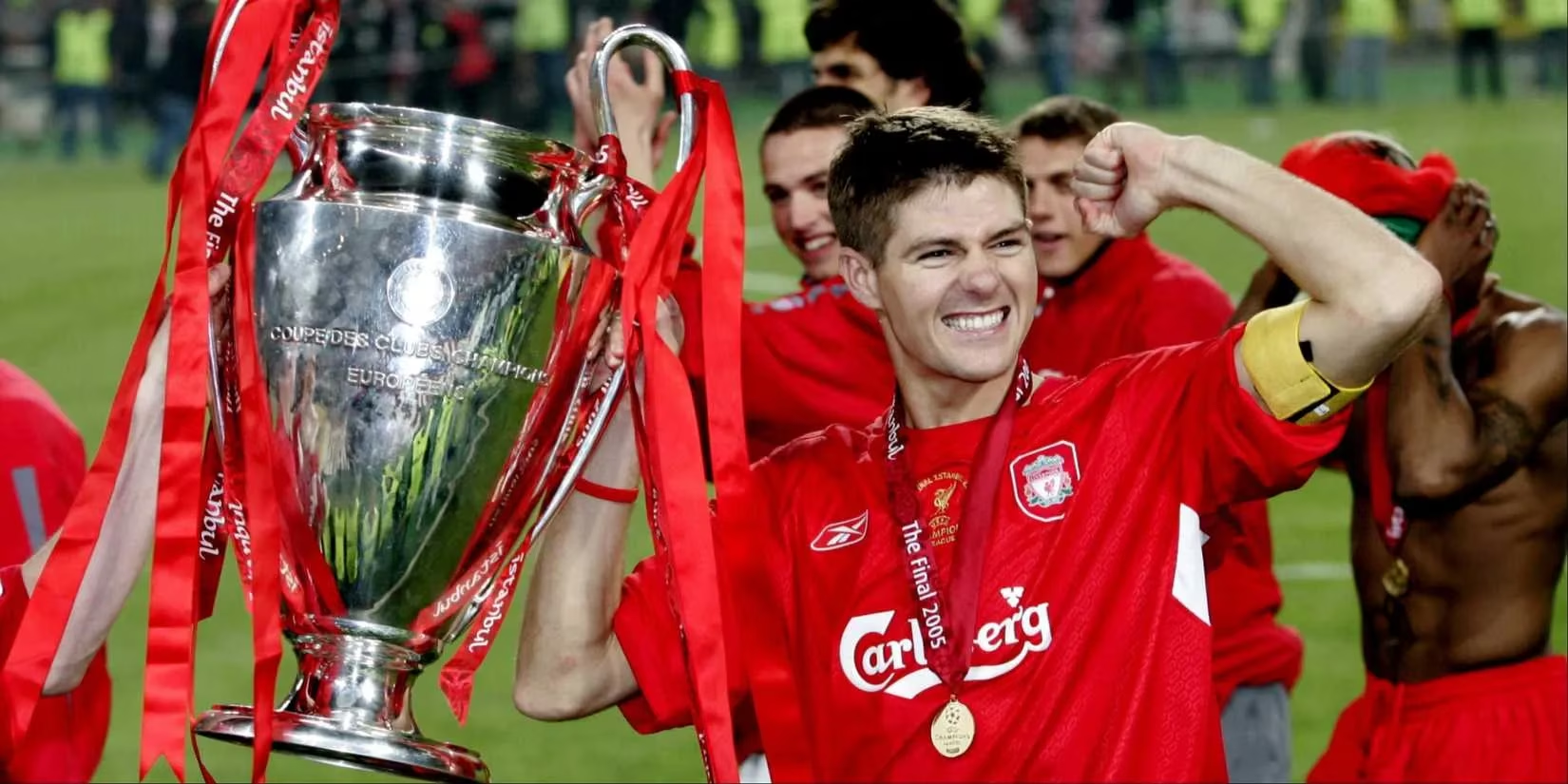
Yes, the missing Premier League title is the eternal 'but' in Gerrard's legacy, especially when compared to Scholes's 11 and Lampard's 3. But does a team trophy, reliant on the collective strength of 25 men over 38 games, definitively measure an individual's greatness? Gerrard's brilliance often was Liverpool; he carried teams to finals and victories they had no right to reach on paper. His 2005 Champions League final performance and the 2006 FA Cup final (the 'Gerrard Final') are testaments to a player who could single-handedly defy logic.
🏆 The Final Whistle: A Legacy Beyond Comparison
So, where does this leave the debate in 2026? The stats show us three distinct prototypes: the scorer (Lampard), the orchestrator (Scholes), and the complete, inspirational force (Gerrard).
-
Lampard redefined the goal-scoring midfielder.
-
Scholes was the metronome, the artist whose passing was a form of art.
-
Gerrard was the avatar of willpower—a player who could score a 35-yard thunderbolt, make a last-ditch tackle, and deliver a perfect cross, all while dragging his teammates by sheer force of personality.
Carragher's verdict cuts through the noise. It's not just about the trophies in the cabinet (though Gerrard has his fair share), or the goals on the spreadsheet. It's about the intangible impact, the respect from the fiercest rivals and smartest managers, and the ability to inspire awe in even your most critical teammates. When the dust settles, the argument that the one player both Mourinho and Ferguson desperately wanted—the one who commanded such universal respect from those who knew him best on the field—stands tallest, might just be the most compelling one of all. The debate may rage on among fans, but from the inner sanctum of the game, the answer, for one well-placed judge, was never in doubt.
Leave a Comment
Comments