
Consequences of Mocking a Tragedy: A Celtic Fan Loses His Job After Disgraceful Old Firm Gesture
As a lifelong football fan, I've always known that the Old Firm derby between Celtic and Rangers is more than just a game. It's a clash of history, identity, and raw emotion, where the line between fierce rivalry and outright offense can be tragically thin. The latest chapter, a tense 1-1 draw at Ibrox, was already significant with Celtic having secured their fourth consecutive Premiership title. Yet, once again, the match's legacy is being defined not by the on-field action, but by a shocking incident in the stands that has rightly sparked outrage and serious consequences.
In the aftermath of the match, a video began circulating online that left me, and many others, utterly appalled. The footage showed a man, later identified as Darren Malloch, deliberately mocking the Ibrox stadium disaster of 1971. This was no spur-of-the-moment taunt; it was a calculated act of cruelty. He first held up his mobile phone screen displaying the number 66—a direct reference to the 66 fans who lost their lives in that tragic crowd crush. Not content with that, he then put his phone away and proceeded to flash the numbers with his fingers, seemingly to provoke a reaction from the home supporters around him. Watching it, I felt a deep sense of shame that anyone connected to the sport I love would sink so low. That day in 1971 remains the darkest in Rangers' history, a somber reminder of the very real dangers in football, and to treat it as a punchline is beyond comprehension.
The fallout was swift and unequivocal. Darren Malloch was employed as a project manager with Advance Construction Scotland. The company, upon becoming aware of his actions, conducted a swift investigation and announced his immediate dismissal. A company spokesperson stated clearly: "We can confirm that an individual has been dismissed from our employment, following an incident involving completely unacceptable behaviour at the recent Rangers v Celtic football match. As a company, we hold all employees to the highest standards of conduct, both inside and outside the workplace." This decisive action sends a powerful message that such behavior carries real-world consequences, extending far beyond the stadium walls. Your job, your reputation—they are not shielded by the cloak of football rivalry.
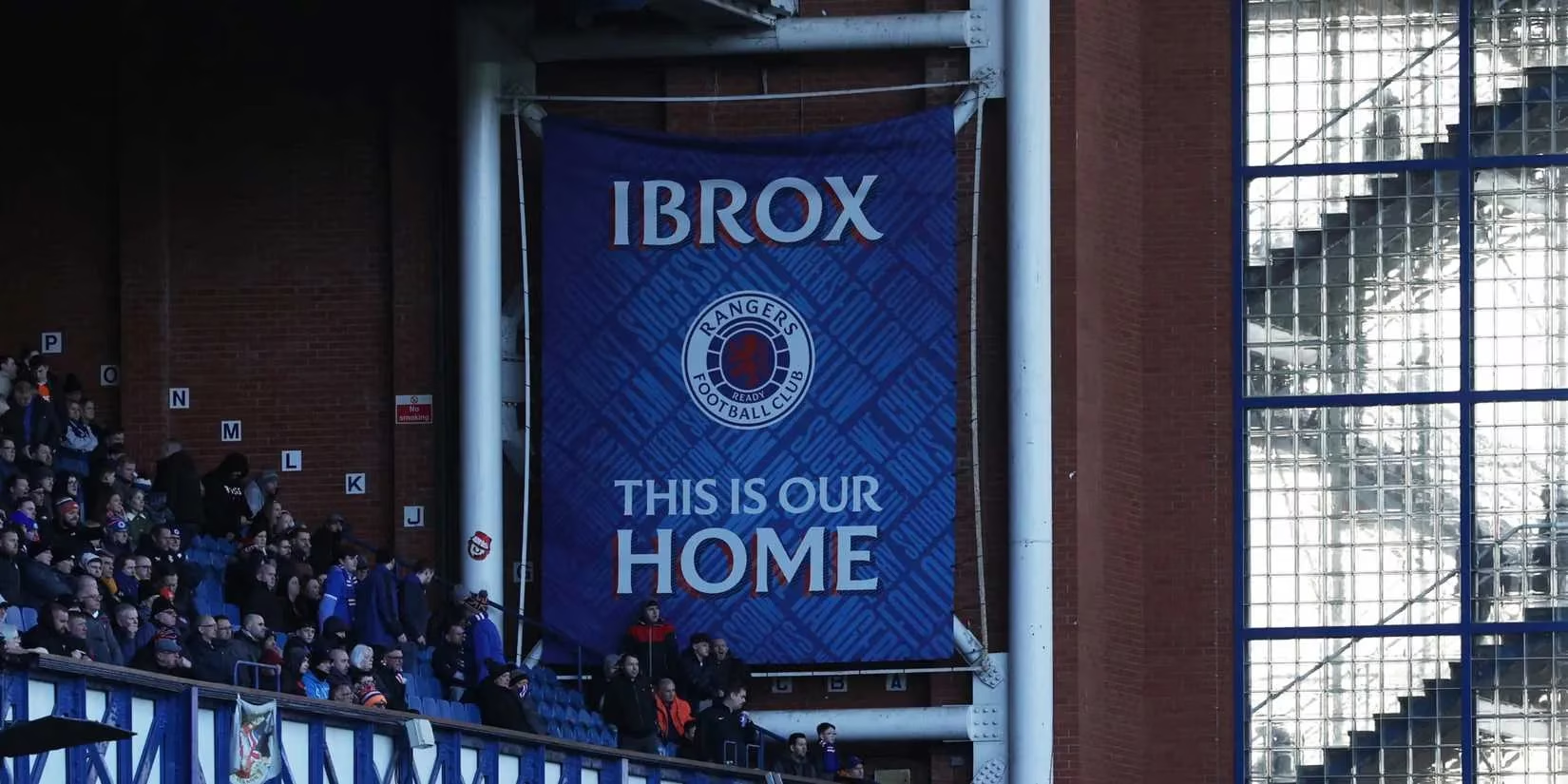
Rangers Football Club itself was quick to condemn the "abhorrent" mocking of the disaster. In a strongly worded statement, the club reaffirmed that the 1971 tragedy is a sacred, painful memory for their community, not a subject for ridicule. This unified stance from both a major employer and a football club is perhaps the only silver lining in this grim story. It shows a growing intolerance for what has become known as 'tragedy chanting'—the targeted singing or gesturing about historical disasters involving fans of rival clubs.
Sadly, this incident is not an isolated one. It fits into a deeply concerning trend. According to reports from organizations like Kick It Out, the 2023-24 football season saw a staggering 32% increase in reports of discrimination compared to the previous year, with tragedy-related abuse being a significant component. This isn't just about banter; it's about weaponizing genuine human suffering. I've heard the arguments—"it's just part of the rivalry," "it's to get under their skin." But there is a fundamental difference between chanting about a missed penalty and mocking an event where people died. One is about sport; the other is about profound human loss.
The culture within football grounds needs a seismic shift. Clubs, fan groups, and governing bodies must work together to educate and enforce. Some positive steps are being taken:
-
Stronger Sanctions: Immediate bans from stadiums for anyone found engaging in tragedy chanting.
-
Education Programs: Initiatives in schools and communities to explain the history and impact of these disasters.
-
Empowering Bystanders: Encouraging respectful fans to call out this behavior among their own supporters.
-
Corporate Accountability: More companies following the lead of Advance Construction Scotland, making it clear that such actions are a fireable offense.
As I reflect on this whole sorry episode, my mind goes to the families of the 66. Every time a so-called 'fan' makes a gesture like flashing a 66, they reopen those wounds. Football rivalry should be passionate, it should be loud, and it should be competitive. But it must have a bottom line—a line drawn at the memorials of the deceased. What happened to Darren Malloch is a direct result of his choice to cross that line. He chose to turn tragedy into a taunt, and he has paid the price with his livelihood. I can only hope this serves as a stark, unforgettable lesson to others. The beautiful game should unite us in passion, not divide us through the exploitation of pain. Let's keep the rivalry on the pitch, where it belongs, and show some basic human decency off it.
Leave a Comment
Comments