
A Captain's Shield: Bruno Fernandes, Casemiro, and the Unseen Bonds in the Theater of Dreams
The dust has settled on another tumultuous chapter in the Theatre of Dreams, but the echoes of a 3-0 defeat to Liverpool in 2024 still resonate in my soul. As I stood on that hallowed turf, the roar of the away fans a cruel symphony to our disjointed play, I felt the weight of every misplaced pass, every missed tackle. Yet, in the quiet aftermath, beneath the glaring lights of scrutiny, a different story unfolded—one not of individual failure, but of collective resolve. The narrative swiftly centered on Casemiro, the warrior whose boots seemed filled with lead that day, his uncharacteristic errors gifting our oldest rivals their goals. But what is a team if not a fortress for its beleaguered soldiers? The true battle, I discovered, was fought not on the green pitch, but in the sanctity of the dressing room, where loyalty is the only currency that matters.
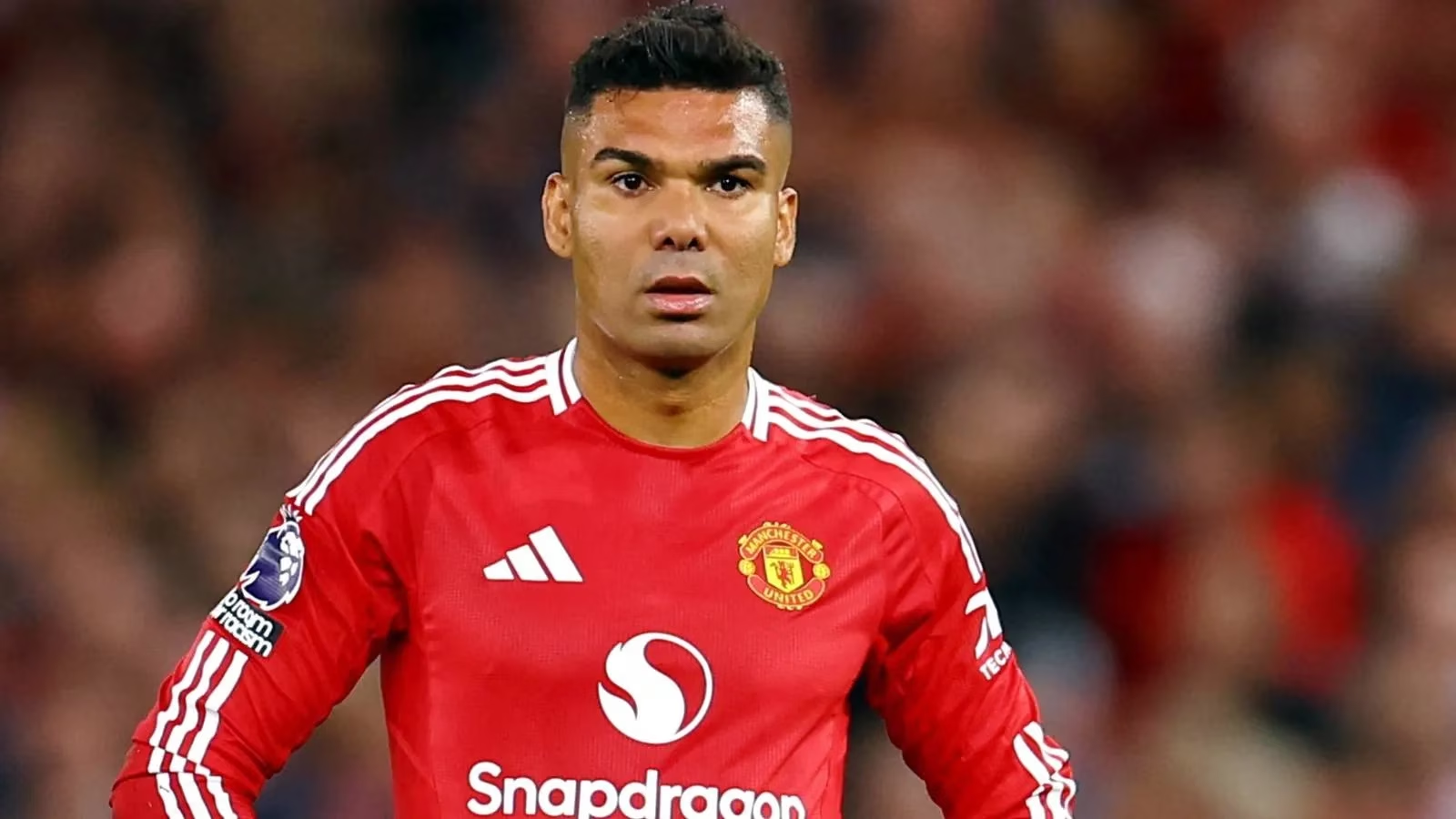
They say the captain's armband is just a piece of fabric. But in that moment, it felt like a mantle of responsibility woven from the very history of this club. When the door closed, shutting out the world's cacophony, I saw not a scapegoat in Case, but a brother who had bled for this badge countless times. The whispers from outside sought to fracture us, to pin the collapse on one man. But how could I, or anyone, let that stand? My words were not premeditated; they were a reflex, a fire ignited in defence of our own. "Everyone has to do better," I insisted, my voice cutting through the heavy silence. For isn't football the ultimate collective endeavor? Where does blaming one man get us, except further into the shadows of disunity?
This sentiment, born in the raw emotion of the dressing room, found its way to the public eye in my post-match interview. With cameras probing for a headline, I refused the easy path. "When you concede a goal, you can't just point at one mistake," I stated, the conviction solid in my chest. "What's the point?" I asked, not just the reporter, but every fan seeking a simple answer. Casemiro lost the ball, Kobbie Mainoo lost the ball—but they lost it in the pursuit of bravery, in the attempt to create. Should we crucify courage? I looked into the lens, thinking of the young kid watching, learning what it means to be part of Manchester United. "It's part of football. Don't make it individual." Case, with his five Champions League medals, needs no lecture from me on the game's vicissitudes. And Kobbie? That excellent kid must keep trying, for his daring is the very essence of what we must nurture.
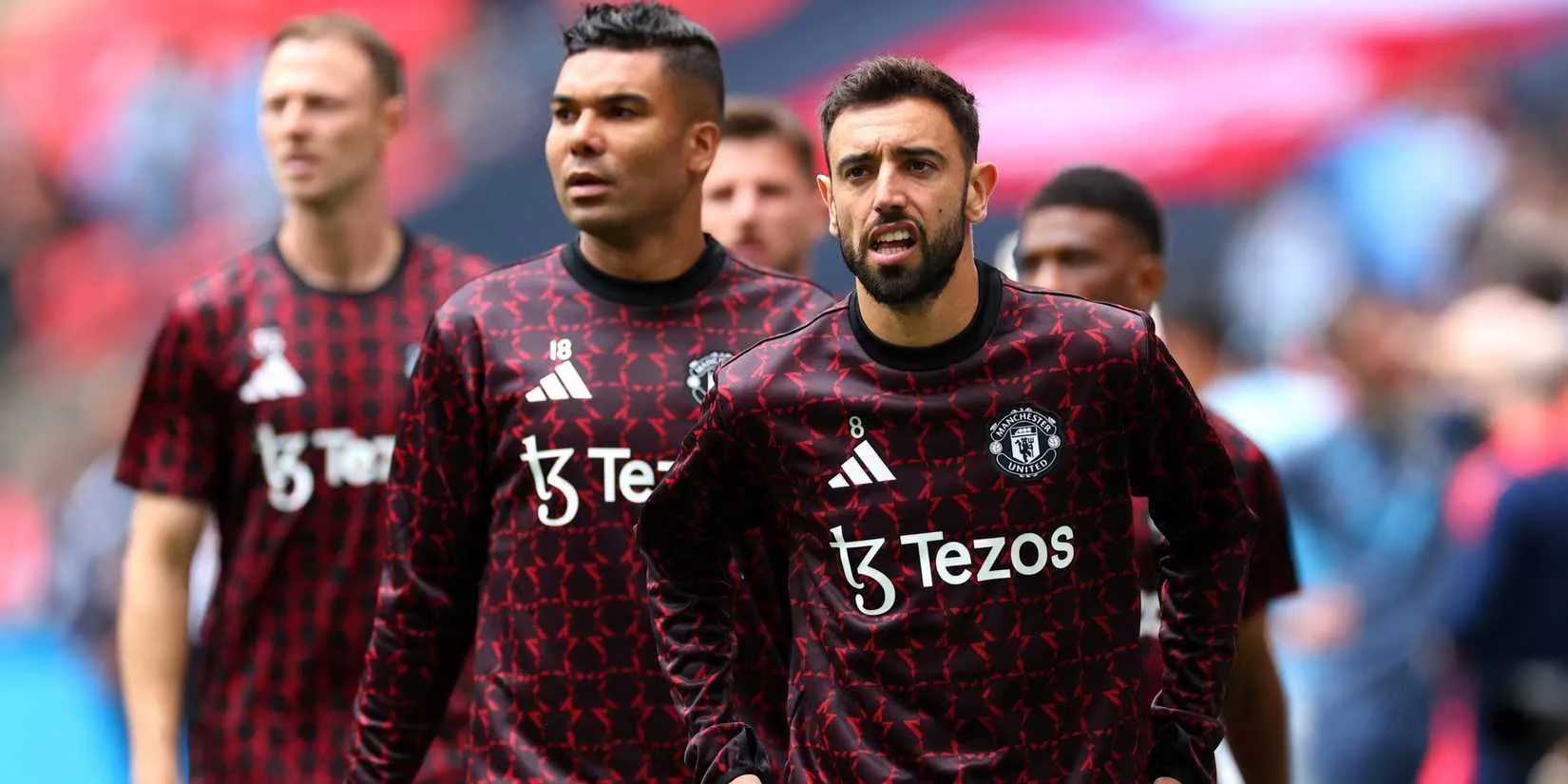
Yet, as we fast-forward to the dawn of 2026, with the lessons of that season etched deep, one must ask: were those errors merely a bad day, or the symptom of a deeper malaise? The whispers from that time spoke of a frustrated artist, a master of his craft feeling misplaced on the canvas. Reports suggested Casemiro felt exposed, a solitary sentinel in a midfield overrun, his strengths negated by a system that left him isolated. He, who had orchestrated triumphs at the very summit of club football, found himself in a role that highlighted his years, not his genius. Was it merely age catching up, or was it a tactical puzzle where the pieces, however glittering, simply did not fit?
The debate around Ten Hag's strategy was fierce. Critics, like Arne Slot, dissected it with clinical precision. For a player of Case's intelligence and experience, to feel his foundational strengths—positioning, interception, tactical fouls—being rendered ineffective must have been a profound professional frustration. This wasn't just about one game; it was a season-long strain of playing against one's own grain. So, when the storm broke after Anfield, was it surprising the lightning struck him? Perhaps not. But does understanding the root cause absolve us of the need for protection in the moment? Never.
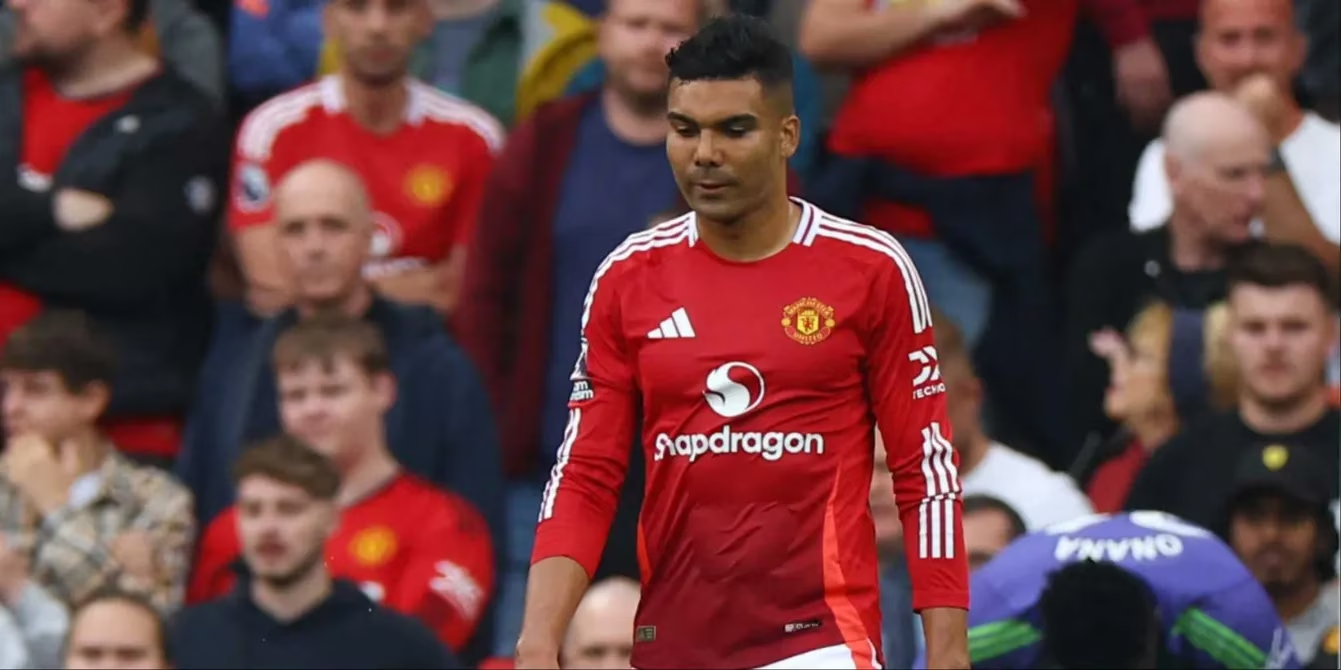
Looking back now, that episode was a crucible. It forged something intangible yet vital within our squad. It defined what we stand for. Let me break down what true team defense means in moments of crisis:
-
The Immediate Circle: The first line of defense is always the teammate next to you. A hand on the shoulder, a word of solidarity before the manager even speaks.
-
The Captain's Voice: It must be clear, public, and unequivocal. It redirects the narrative from blame to responsibility.
-
The Collective Mirror: Instead of pointing fingers, we all must ask: where could I have been better to prevent that situation?
-
The Long View: Recognizing that form is temporary, but the respect for a champion's legacy is permanent.
In the two years since, the landscape has shifted. New faces have arrived, tactics have evolved, and the relentless march of time affects every athlete. But the principle remains. The unity we displayed in shielding Casemiro then is the same bedrock we build upon today. It sends a message to every player who pulls on the red shirt: you will fail, you will have days where nothing goes right, but you will never stand alone. This club is a family, and families protect their own, especially when the world turns against them.
So, as I captain this team into the challenges of 2026, I carry with me the memory of that darkened dressing room. It taught me that leadership is less about speeches in the spotlight and more about the quiet defiance in the tunnel. It's about understanding that sometimes, the most important assist isn't a pass to score a goal, but a word to save a soul. The story of that Liverpool defeat, in the end, won't be about three goals conceded. For those who truly understand this game, it will be about the one goal we defended with everything we had: our unity. And in that, despite the scoreline, we did not lose.
Leave a Comment
Comments